Sunday 2nd April marks Autism Awareness Day 2023, raising awareness on the hurdles that people living with autism navigate every day.
One of the many fantastic organisations in Cornwall working to support young people with autism is The Wave Project in Newquay.
In an interview with CMN’s Dean Hodge, Founder and CEO Joe Taylor tells us more about how The Wave Project started, the impact of surf therapy in improving confidence in young people, and what workplaces can do to create a more inclusive environment for people living with autism.
First of all, can you tell us about the overall mission of The Wave Project and the work you do.
Our mission is to improve the emotional health and well-being of young people through surf therapy.
What was the inspiration and motivation behind starting TWP?
The Wave Project started with the simple idea that a short course of free surfing lessons might help young people feel calmer and less anxious. The NHS in Cornwall funded a small pilot scheme in 2010 to explore the concept and funded a piece of professional evaluation to assess the results. It quickly became clear that outcomes for young people were incredible, and that surfing – when delivered in a supportive and accepting way – could have transformative effects on young people’s mental health. And so the concept of surf therapy was born.
What are the main challenges facing the young people you work with?
Right now, we are experiencing very high levels of anxiety, stress and unhappiness among young people. They feel under constant pressure to succeed, whilst lacking the freedom and agency to get away from their stressors. A lot of young people feel isolated and friendless and have very low self-esteem, even though there is no objective reason for them to feel that way. These trends appear to be worsening, unfortunately. We try to help by offering free surf therapy services to encourage them to feel more positive about themselves and their lives.
For those unfamiliar with the concept of surf therapy, can you summarise the process of the type of activities involved?
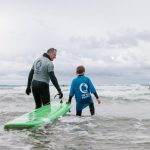
At one level it is very simple – a group of around 10 young people get to do a six-week course of surfing lessons, free of charge, in which they get one-to-one support from a personal peer mentor. By allowing each young person to work at their own pace, always praising them for what they do and fostering a culture of group support, we help all the young people break down their barriers to better self-esteem, confidence and self-worth.
“The rhythm of the waves can be soothing for autistic children, as they tend to be drawn to patterns and regularity.“
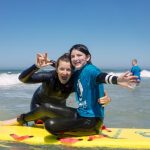 The impact of autism varies depending on the individual and no one person on the spectrum is the same. With the people you work with who are on the spectrum, what are the common difficulties they have from your perspective?
As the question implies, there is a big variation in challenges faced by people with autism. But one common theme is that autistic people – especially children – tend to be quite anxious and can often be isolated. At our surf therapy sessions, autistic children sometimes find the experience overwhelming at first. But we make a point of working at their pace to bring them into each session in a way they feel comfortable with, which helps to reduce anxiety and promote better well-being.
For those on the autism spectrum, as well as the other young people you work with, what are the main benefits of surf therapy in terms of improving their confidence and well-being?
Surf therapy is a wonderful therapy for autistic children. The process of learning to surf is quite kinetic rather than auditory – in other words, students are learning by doing rather than being overwhelmed with lots of instructions. The rhythm of the waves can be soothing for autistic children, as they tend to be drawn to patterns and regularity. The support from the surf mentors is crucial to helping children feel calm, too. Finally, surfing is fun, and catching a good wave always feels great, whether you have autism or not. So everyone can share the stoke together which creates a brilliant feeling of camaraderie and acceptance.
What more could workplaces do to be more inclusive and accessible to individuals with autism?
There is some excellent training by the National Autistic Society which is delivered free to workers – I would strongly recommend workplaces do this. But if they don’t, I would just say that workers should be kind, patient and allow autistic people time to process their thoughts. And it goes without saying that autistic people should be accepted for who they are, without judgement.
What have been some of your biggest success stories, in terms of what the young people you have worked with have gone to achieve?
We are proud of all the young people who complete our surf therapy course, but one or two have gone on to do exceptional things. For example, Charlotte Banfield-Weston was a very shy young person when she took part in a surf therapy course with us back in 2013 but went on to win gold at the World Adaptive Surf Championships in La Jolla, California just five years later. She is also part of the Surfing England Paralympic team. What an amazing young person!
We also have a wonderful young surfer, Alfie, who has flourished thanks to surf therapy. Alfie has autism, and before joining The Wave Project, he struggled with his anger and mental health. Supported by two fantastic volunteers on his surf therapy programme, Alfie had ‘the best time ever’.
“It was, and is still, very fun. They helped with my confidence. They introduced me [to the water] at my own pace and taught me how to stay safe in and out of the water. I feel very calm and playful, and I felt like I could just be myself.” Alfie
He continues to support The Wave Project with numerous fundraising events, and his goal – when he’s older – is to give other children the opportunity to experience surf therapy for themselves.
You can read more about Alfie’s inspiring story on The Wave Project website.
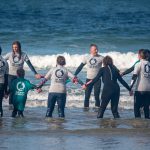 The first official ‘Adaptive Surfing Hub’ for young people with disabilities is set to open in Croyde in North Devon, as part of a collaboration between TWP, Surfing England and Surf South West. How has this come about, and how long in the meeting?
We are so excited to be part of this collaboration with Surfing England and Surf South West. Adaptive surfing has come such a long way in the past decade, from being almost non-existent to now having dedicated Adaptive Surfing Hubs like this one in Croyde. It has been a long journey which has involved everything from writing new training courses for surf coaches to designing specialist wetsuits and equipment. But we are finally getting to the point where surfing is truly accessible for all.
What do you hope will be the centre’s legacy?
We very much hope the legacy will be to open up surfing to people from all backgrounds and all abilities. The surf industry has worked hard over the past few years to clean up its image as an elitist sport, and opened itself up to new ideas and new engagement. That’s brilliant news, since we know the benefits of surfing go far beyond the sport itself and tap into better mental and physical health.
“We very much hope the legacy will be to open up surfing to people from all backgrounds and all abilities.”
What are the ways in which people can volunteer or get involved with TWP?
We are a volunteer-led charity and welcome people from all walks of life to get involved. Our most popular volunteering opportunity is training to become a Surf Mentor, and working directly with young people at our Surf Therapy and Surf Club sessions. However we also have volunteering opportunities for fundraisers, office administrators, retail staff, volunteer drivers and photographers to name but a few. Please get in touch via our website and specify the kind of volunteering you’re most interested in, and we will put you in touch with the right person in the charity.
What is the best thing about living in Cornwall?
For us, it has to be living near to the sea and being able to access the multiple benefits of the ocean so close to home. At The Wave Project, we fully appreciate the healing properties of the water and feel so grateful to be living so close to it.
Favourite beach?
Really difficult to answer, but I would have to choose Towan Beach in Newquay. It’s five minutes from our office and provides a perfect lunchtime swim or morning surf all year round.